The Language of the Whole World
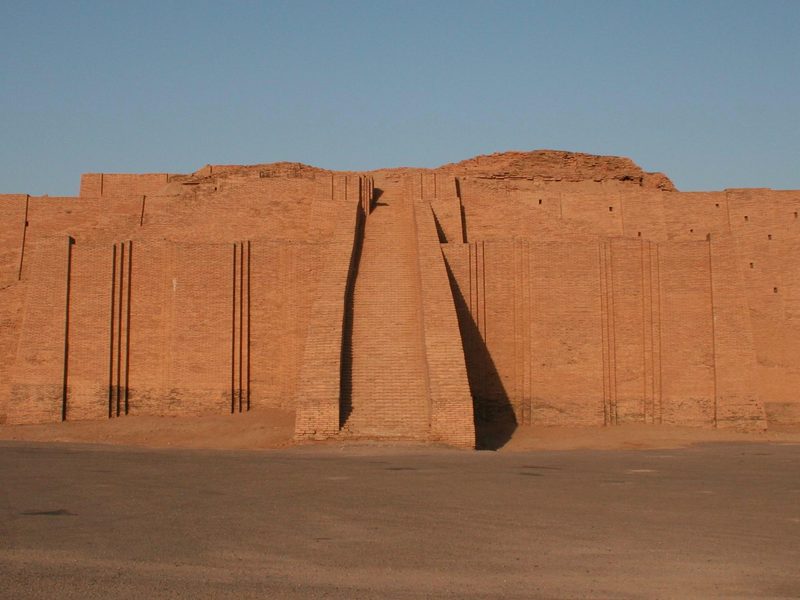
This guided journey, like the others on the site, is an exercise in plausibility. The aim is not to prove the Bible, but to ask whether Genesis 1 to 11, read as history in the way these guided journeys propose, can be integrated with what we know of the ancient world.
Here the question is language. Genesis 11:1 says that "the whole world had one language and a common speech." Most readers take this as a claim about every human language beginning at Babel. But on the mainstream picture, many peoples and many languages were already in the world long before Babel, which on the chronology these guided journeys follow falls late in the third millennium BC.
We propose a narrower reading, and ask whether it is plausible. First, that the one language of the whole world was not every human tongue, but the single language of the ancient world, the world before the flood. Second, that this language can be named in our own history. We propose that it was Sumerian.
1. One language, carried from the world before the flood
This reading assumes what the earlier guided journeys have already proposed, and does not re-argue it. The Cain and the Cainites journey proposed that Cain was sent out, not into an empty earth, but into a world already full of people: our world, running in parallel to the ancient world he came from, the lost world of the garden. We take that up here only where it bears on language.
In the ancient world, before the flood, there was one language. On this reading, when Cain crossed into our world, near the Zagros foothills east of where the Tigris and Euphrates meet, around 5000 BC, he carried that language with him, and over the following centuries his line plausibly moved west, into the plain of Sumer. When the flood entered the ancient world, on this chronology around 2900 BC, Noah's family carried the same language through it, a second crossing of the ancient world's language into ours, and came to rest at Mount Ararat. Genesis 11 then describes a journey south, until some of them settled on "a plain in Shinar" (Genesis 11:2), the land of Sumer, roughly a thousand kilometres away.
If that is so, Genesis 11's "the whole world had one language" need not mean every human tongue. It can mean the language of the ancient world, where it truly was the only one. In our world it was always one language among many.
The wording of Genesis itself leans this way. The chapter opens by telling us that the whole world had one language and a common speech. Only in the next verse do people set out, moving east, and settle on a plain in Shinar. Read closely, the two verses sit at different moments. The first is a backdrop, the settled state of an earlier time: one language, and no need of a translator, the world in which Methuselah and the others lived out their long lives. The second verse takes up the story later, in our world, on the plain where the tower will rise. The same Hebrew expression opens both verses, and, as the commentator Gordon Wenham notes, it can mark just this kind of move to a new point in time. So the one language of the whole world can be read as the language of the world before the flood, while the scene at Babel belongs to ours.
There is a further hint in the builders' own aim. They set out to make a name for themselves (Genesis 11:4). To make a name is to make it among others. A people entirely alone in the world would have no one before whom a name could be made, and no reason to seek one. The wish implies an out-group, others among whom the builders sought standing. So the text itself need not be read as claiming that those at Babel were the only people on the earth. On this reading they were one people, with one language, among the many peoples and tongues of our world.
The narrator may hint at who these builders were. Genesis 11:5 calls them "the sons of the Adam" (bene ha-adam), an expression found only here in the books of Moses. Elsewhere the phrase would read simply as "mankind"; but in a chapter this careful, following the genealogy of Adam's line through Noah, it can be read as marking the builders out as that line in particular: Adam's descendants, keepers of the old world's one language, now settled among the many peoples of the new.
2. Why we propose that language was Sumerian
If Cain and Noah spoke the one language of the ancient world, and if this reading is also historical, we would expect to find a single major ancient language in Mesopotamia: appearing at about the right time, with no known ancestors, and, because Genesis says it was confused and scattered at Babel, with no surviving relatives or descendants. We propose that Sumerian fits that description, and several further observations point the same way.
- Ziggurats at the right time and place. Genesis 10:25 says that Peleg was so named because "in his time the earth was divided," widely read as referring to Babel. On this chronology Peleg's lifetime spans roughly 2372–2033 BC. The Sumerian king Ur-Nammu (reigned 2112–2094 BC) is "for ever associated with the ziggurats . . . which he erected in Ur, Uruk, Eridu, Nippur and various other cities" (Roux). Sumerian speakers were building ziggurats in southern Mesopotamia at about the time and place the account describes.
- The rapid end of Sumerian. Roux described the fall of Ur at the close of the third millennium BC as marking "the end of the Sumerian nation and type of society," with Akkadian displacing Sumerian as a spoken language in what he called a "linguistic revolution," though Sumerian continued as a written and liturgical language for centuries. A spoken language confused and scattered, shortly after its speakers built towers that fit the description, at about the date the chronology gives.
- The one ancient parallel is Sumerian. The only Mesopotamian text with a possible parallel to Babel, the epic "Enmerkar and the Lord of Aratta," is itself Sumerian. Kramer read it as showing the Sumerians "believed there was a time when all mankind spoke one and the same language," though others read it more cautiously. Whichever is right, the one ancient parallel to the Babel story is in Sumerian and about Sumerian.
- The oldest flood accounts are Sumerian. The earliest accounts of a great flood resembling the biblical one, including the Eridu Genesis and the Sumerian King List, are in Sumerian. The King List also records pre-flood reigns far longer than those after, echoing the biblical pattern. If Noah's family were Sumerian speakers, this is what we would expect.
- A people defined by their language. Genesis 11:6 describes the builders as "one people speaking the same language." Roux noted that "the appellation 'Sumerians' should be taken as meaning 'Sumerian-speaking people' and nothing else": a people defined by their language in an unusual way, much as Genesis describes.
The tower is also placed in "a plain in Shinar" (Genesis 11:2), a name that may derive from a Sumerian term for their own territory; and the first known writing system was Sumerian. Taken together, we think this makes a reasonable cumulative case that the Babel account can be read as the decline of Sumerian and the dispersal of its speakers. Not a proof, but a plausible fit.
3. The Sumerian Paradox: a language isolate with no isolation
There is a second observation that this reading helps explain, and which stands on its own whatever one makes of the first. Many well-known language isolates make sense once you put them on a map. Basque survived in the Pyrenees, Korean on its peninsula, Ainu at the island edge of northern Japan, Burushaski in the remote Karakoram valleys. Physical isolation often makes linguistic isolation plausible.
Sumerian is the striking exception. It sat in the flat, open plains of Mesopotamia, on major trade routes, in constant contact with its neighbours. It was not isolated at all. And yet it has no known relatives. Akkadian is Semitic, Hittite Indo-European, Egyptian Afro-Asiatic; the other great river-valley civilisations produced languages that fit known families. Sumerian stands alone.
Elamite, next door, comes closest to being a second exception: usually classed as an isolate, with its capital Susa on the same open lowland. But Elam was a double kingdom, and its highland half in the Zagros sheltered the language each time the plain was overrun; Elamite outlived spoken Sumerian by more than a thousand years. The near-exception shows what mattered: a refuge. Sumerian had none.
Compare the map: Take the Isolate Tour
A second anomaly stands beside the first. Dominant languages normally leave descendants: Latin became French, Spanish and Italian; Akkadian's Semitic family lives on in Aramaic, Arabic and Hebrew. Sumerian left nothing. So the record holds two oddities at once: an isolate with no geographic explanation, and a once-dominant language that vanished without descendants.
The reading proposed here addresses both from one starting point. On this reading Sumerian had no relatives because it came from outside our world, and left no descendants because it ended by being scattered into a world already full of other languages, absorbed into families it had never belonged to. We do not offer this as proof. But two independent anomalies meeting one explanation is the kind of convergence that makes a reading worth taking seriously.
Watch the evidence unfold
The home page opens a guided journey version of this argument on the map, tracing the same sequence: the one language entering our world with Cain, carried again through the flood, and finally confused and scattered at Babel, a language that leaves no relatives and no descendants.
None of this proves the biblical text, and it is not meant to. It offers a reading of Genesis 11, resting on what the earlier guided journeys proposed about Genesis 4 and 5 and the flood, that fits independently attested features of the linguistic record and coheres with what is known of the ancient Near East. The reading is a proposal. We think the convergence it produces, across the identification of Sumerian and the two standing anomalies of its isolation and its extinction, is plausible enough to be worth serious consideration.
Develops chapter 5 of A Timeline of Origins (Michael D. Russell, 2024). Georges Roux, Ancient Iraq, 3rd ed. (London: Penguin, 1992); S. N. Kramer, "The 'Babel of Tongues': A Sumerian Version," Journal of the American Oriental Society 88 (1968): 108–11; Gordon Wenham, Genesis 1–15 (Word, 1987). The language-isolate argument is developed here beyond the book.
Scripture quotations taken from The Holy Bible, New International Version® NIV®. Copyright © 1973, 1978, 1984, 2011 by Biblica, Inc.™ Used by permission. All rights reserved worldwide.