A Timeline to Christ
This guided journey follows a single thread from the beginning of biblical history to the present. It asks you to watch a pattern.
“Everything must be fulfilled that is written about me in the Law of Moses, the Prophets and the Psalms.” Then he opened their minds so they could understand the Scriptures. He told them, “This is what is written: The Messiah will suffer and rise from the dead on the third day, and repentance for the forgiveness of sins will be preached in his name to all nations, beginning at Jerusalem.” (Luke 24:44–47)
Over 5,000 years, different authors in different centuries made specific predictions about a coming figure: that he would be a descendant of Eve, of Abraham, of David; that he would die as a guilt offering for sin; that he would be pierced in Jerusalem; that he would rise from the dead; that the news would reach every nation on earth.
Watch where those predictions point. Then decide what you think.
The promises converge
You have watched the promises accumulate over 5,000 years. A descendant of Eve. A blessing for all nations through Abraham. A guilt offering greater than any animal. An eternal king from David’s line. A man who would be pierced in Jerusalem and then see the light of life again.
These were written by different people, across different centuries, and they converge on one person. That convergence is either the most remarkable coincidence in history, or it is exactly what it claims to be: a story that was known in advance.
Jesus said: “Everything must be fulfilled that is written about me in the Law of Moses, the Prophets and the Psalms.” (Luke 24:44)
What is a guilt offering?
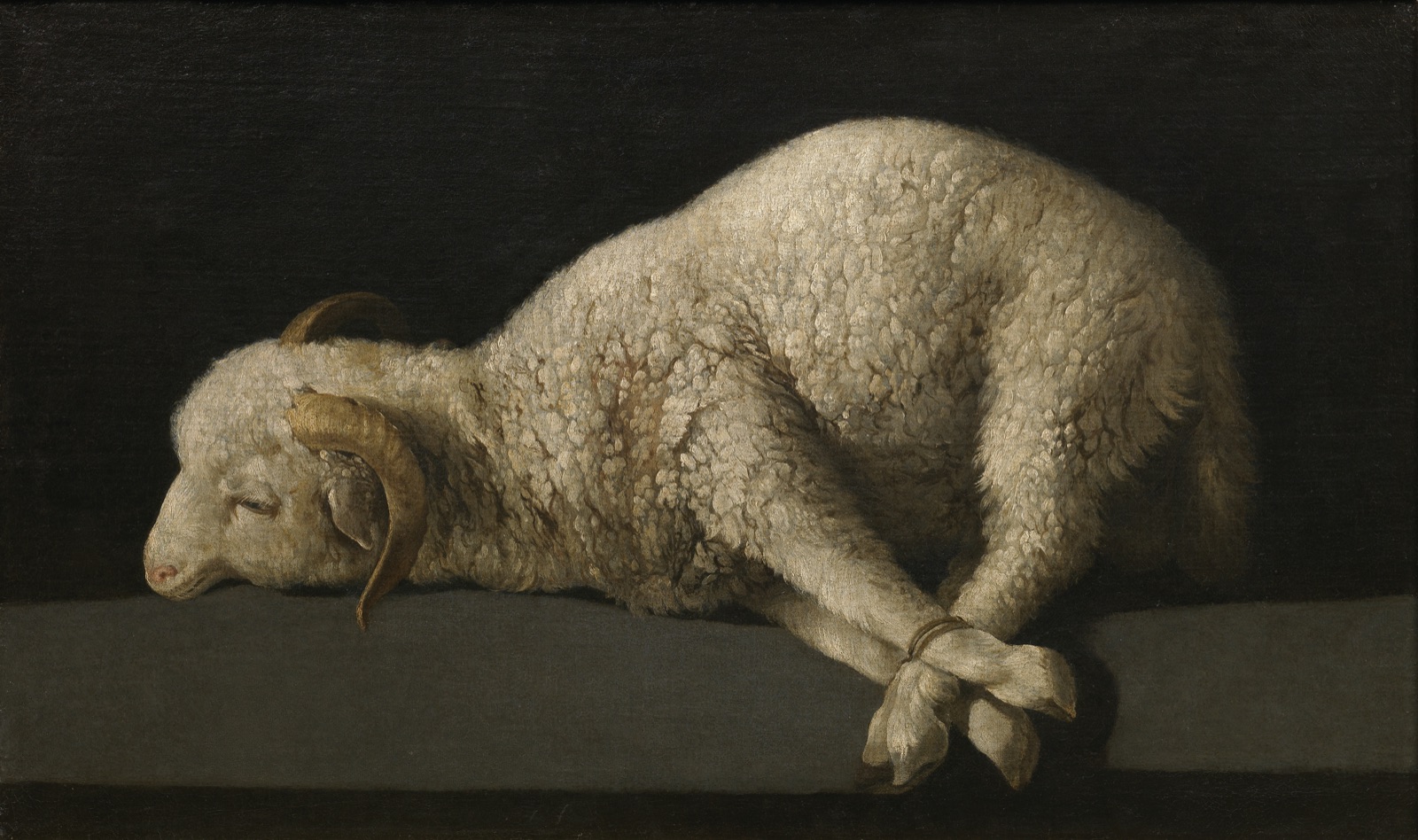
In ancient Israel, when someone sinned, they brought an animal to the priest. The animal was killed. The idea was precise: sin deserves death. A substitute dies. The guilty person goes free.
“The priest will make atonement for them with the ram as a guilt offering, and they will be forgiven.” (Leviticus 5:16)
But the system itself raises a problem it cannot solve. What if a person’s guilt is too great for any animal to pay for? What if the offence is against someone infinitely great? An animal’s death is finite. A finite payment cannot cover an infinite debt.
Isaiah 53, written 700 years before Christ, gives the answer: a man, not an animal, will give his life as a guilt offering. And because this man is also the Son of Man of Daniel 7 (who must be God, since all nations worship him), his death is not finite. It is sufficient to pay for the guilt of the whole world.
That is why Jesus, at the Last Supper, said: “This is my body given for you… This cup is the new covenant in my blood, which is poured out for you.” He was identifying himself as the guilt offering Isaiah described.
Isaiah 53: written 700 years before
Isaiah writes around 700 BC, seven centuries before Jesus. He describes a man who suffers, is pierced, carries the sins of many, and is killed. And then, remarkably: “After he has suffered, he will see the light of life.” (Isaiah 53:11) He does not stay dead.
The passage was so widely known in first-century Judaism that one of the Dead Sea Scrolls (dated before 100 BC) contains the entire text, word for word as we have it today. This is not a text Christians invented after the fact. It was in the hands of Jews who were still waiting for it to be fulfilled when Jesus was born.
When the Ethiopian official in Acts 8 is reading this very passage and asks “Who is the prophet talking about?”, Philip explains that it refers to Jesus. The first Christians did not search for texts to fit Jesus. They found that the texts they already had pointed precisely to him.
Why must the Christ be God?
The Old Testament is unmistakeable on one point: only God is to be worshipped. “You shall have no other gods before me.” (Exodus 20:3). Yet Daniel 7 describes a figure who receives worship from all peoples of every language, worship that “will not pass away.” Therefore this figure must be God.
Psalm 45 addresses the coming king directly as “O God” (v.6). Psalm 72 says all kings will bow down to him. The Christ who is worshipped forever must be divine.
There is also a logical reason: only God can pay an infinite debt. Our sin is against someone infinitely holy. The price of that offence is infinite. A finite person’s death cannot pay an infinite debt. Only God, who is infinite, can. That is why the guilt-offering man must be God himself.
Jesus accepted this conclusion. When the high priest asked him directly, “Are you the Messiah, the Son of the Blessed One?”, Jesus replied: “I am. And you will see the Son of Man sitting at the right hand of the Mighty One and coming on the clouds of heaven.” (Mark 14:61–62). He was claiming to be the figure of Daniel 7. The high priest understood exactly what he was claiming, and called it blasphemy.
The historical evidence for the resurrection
500+ eyewitnesses. Paul writes in the mid-50s AD, about 20 years after the resurrection, listing those who had seen the risen Jesus: Peter, the twelve disciples, “more than five hundred of the brothers and sisters at the same time, most of whom are still living” (1 Corinthians 15:6). He is inviting scrutiny. Go and ask them, he says.
The empty tomb. Jesus’ enemies never denied the tomb was empty. They only tried to explain it away (Matthew 28:13). The emptiness of the tomb was not in dispute; the dispute was over how to explain it.
James, Jesus’ own brother. James did not believe in Jesus during his lifetime (John 7:5). After the resurrection, he became a leader of the Jerusalem church and died for his faith. The most plausible explanation: he saw his brother alive after death.
Paul, the persecutor. Paul was actively hunting down Christians when he experienced a dramatic reversal. He claimed to have seen the risen Jesus (1 Corinthians 15:8) and spent the rest of his life proclaiming it at personal cost. People do not give their lives for something they know to be a lie.
The change of the Sabbath. Jews had kept Saturday as the holy day for a thousand years, commanded in the Ten Commandments. The early Jewish Christians began meeting on Sunday, because Jesus rose on Sunday. They were willing to change a fundamental practice because they were absolutely certain of what they had seen.
Couldn’t the fulfilment have been written to fit?
The natural objection runs like this: the gospel writers knew the old promises, so they shaped their story of Jesus to match. Two features of the evidence make that harder than it sounds.
First, the promises are demonstrably older than Jesus. The Great Isaiah Scroll found at Qumran, containing the whole of Isaiah 53, is dated on physical and palaeographic grounds to more than a century before Jesus was born. The Septuagint, the Greek translation of these books, was made earlier still. Whatever one makes of the fulfilment, the predictions were public property long before the events. The promises cannot have been written after the fact.
Second, the fulfilment is the wrong shape to be an invention. A crucified Messiah was not what anyone was waiting for; Paul calls it “a stumbling block to Jews and foolishness to Gentiles” (1 Corinthians 1:23). Isaiah 53 was not the standard messianic reading of the day. A community inventing a Messiah to fit expectations would not have invented this one. The accounts read like men reporting something that overturned their categories, who then found, looking back, that it had been written down all along. And the core facts were not private claims: Jesus’ execution under Pontius Pilate is recorded by Tacitus, a Roman historian with no sympathy for Christians, and the proclamation of the resurrection began within weeks, in Jerusalem itself, the one city where an occupied tomb could have ended it. The summary Paul hands on in 1 Corinthians 15, that Christ died for our sins according to the Scriptures, was buried, and was raised on the third day, is dated by most scholars, on the letter’s own internal evidence, to within a few years of the crucifixion. There was no time for legend to do this work. And “on the third day” is not a stray detail: it is the Old Testament’s own marked day of reversal from death to life, a pattern you can run across the whole Old Testament yourself.
None of this compels belief, and we do not claim it does. But it closes the easy exits. The promises cannot be post-dated, and the fulfilment cannot be comfortably explained as wish-fulfilment, because it contradicted the wishes. What remains is the convergence itself, and the question of what best explains it.
The Great Isaiah Scroll (1QIsaa), containing the whole of Isaiah 53 and dated before 100 BC: Israel Museum, Jerusalem. Jesus’ execution under Pontius Pilate: Tacitus, Annals 15.44. The early summary of the gospel: 1 Corinthians 15:3–8.
What does this mean for you?
Jesus died to pay for your sin. He rose again to give you new life. That offer is open to anyone who turns to him.
If you want to respond, you could pray something like this, not as a magic formula but as a genuine turning toward God:
Lord God, I’m sorry that I have rejected you as the ruler of my life. I need your forgiveness. Thank you for sending Jesus to die in my place. Thank you that he rose again to give me new life. Please forgive me and change me, that I might live with Jesus as my ruler. Amen.
If you have prayed that prayer and meant it, you may feel different, or you may not. Feelings are not the point. The important thing is this: you can be confident that God has answered. He did the hard thing by sending his Son to die for you. Answering the prayer of someone who genuinely turns to him is the easy thing. He will do it.
Tell someone. Find a church where the Bible is taught. Read Luke’s Gospel.
Scripture quotations taken from The Holy Bible, New International Version® NIV®. Copyright © 1973, 1978, 1984, 2011 by Biblica, Inc.™ Used by permission. All rights reserved worldwide.